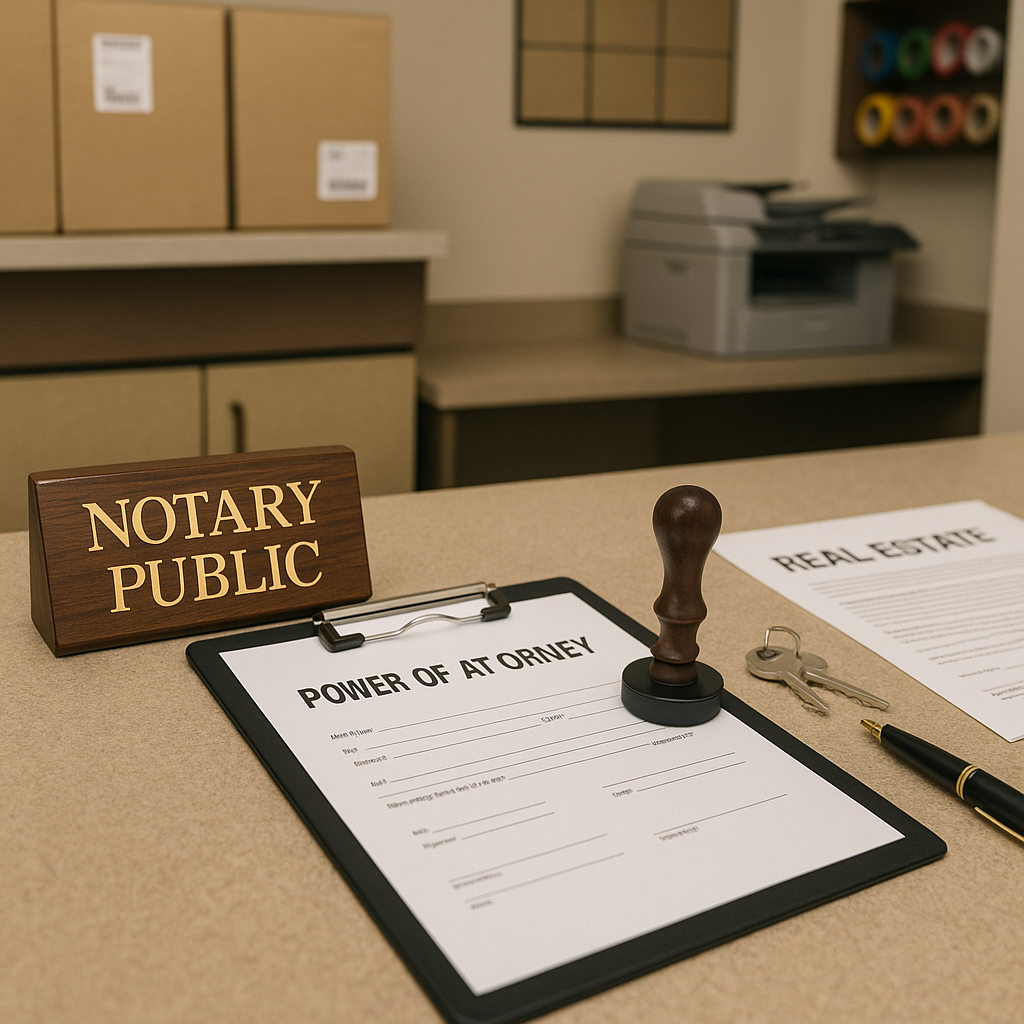
Understanding Notary Public Services in Everyday Life
If you have ever scrambled to find a notary public at the last minute, you are not alone. Between power of attorney forms, real estate closings, and critical legal paperwork, notarization often shows up at stressful moments. Knowing when you need a notary and what to bring can save you time, money, and frustration.
Here in Sherman Oaks and the greater San Fernando Valley, residents frequently stop by Federal Mailbox Center for same-day notarizations on everything from school forms to complex real estate documents. This guide will walk you through the essentials: when a notary is required, how document notarization works, and what to expect for power of attorney and real estate transactions.
What a Notary Public Does (and Doesn’t Do)
A notary public is a state-commissioned official who verifies identities, witnesses signatures, and helps prevent fraud. The notary’s job is not to give legal advice or “approve” the content of a document. Instead, the notary is there to confirm that:
- The signer is who they say they are (via valid ID).
- The signer is signing willingly and appears mentally aware.
- The signer understands they are signing that specific document.
In California, this is especially important for high-impact documents like powers of attorney, real estate transfers, and certain financial or medical forms. In busy neighborhoods like Van Nuys and Sherman Oaks, many institutions will not accept important paperwork without proper notarization.
Common Situations When You Need a Notary
Not every document needs to be notarized, but there are several common scenarios where notarization is either required by law or strongly recommended.
1. Power of Attorney (POA)
A power of attorney gives someone else legal authority to act on your behalf. Depending on the type, this may involve managing finances, making health care decisions, or signing real estate documents for you. Because a POA grants such significant power, banks, hospitals, and title companies typically insist it be notarized.
In California, POAs are commonly notarized to:
- Help financial institutions accept the document without hesitation.
- Reduce the risk of challenges later from family members or other parties.
- Provide a clear record that you signed willingly and were properly identified.
If you are in the San Fernando Valley and preparing a POA for an aging parent, a loved one going overseas, or your own estate planning, plan on having it notarized. Many attorneys will draft the form and then send you to a local notary public to complete the signing.
2. Real Estate Transactions
Real estate documents almost always require notarization. This includes:
- Grant deeds and quitclaim deeds
- Deeds of trust and mortgage documents
- Refinance paperwork
- Home equity line of credit (HELOC) agreements
Title companies and lenders rely on notarized signatures to ensure that the correct person is transferring or encumbering the property. In areas like Sherman Oaks and Van Nuys where properties frequently change hands, having easy access to a reliable notary can keep your closing on track.
3. Financial and Business Documents
Depending on the institution, you may need a notary for:
- Bank forms and affidavits
- Business agreements and contracts
- Loan documents and guarantees
- Statements for insurance or legal matters
While not every financial form needs a notary, many banks and lenders request notarization when the stakes are high or fraud risk is significant.
4. Personal and Family Documents
Beyond law offices and title companies, everyday residents in the 91401 area come in for notarization of:
- School and travel permission forms for minors
- Custody-related paperwork
- Certain medical directives and advance health care forms
- Letters of consent, declarations, and sworn statements
When in doubt, ask the organization requesting your document whether notarization is required or recommended. Having it notarized upfront can prevent delays later.
How Document Notarization Works Step by Step
Knowing what to expect helps you prepare and avoid repeat trips. Here is the typical notarization process at a business services center like Federal Mailbox Center in Sherman Oaks:
Step 1: Bring a Valid, Acceptable ID
California notaries must verify your identity using specific forms of identification. Commonly accepted IDs include:
- California or other U.S. state driver’s license or ID card
- U.S. passport (book or card)
- Foreign passport stamped by U.S. immigration authorities
- U.S. military ID that meets state requirements
Always bring original, unexpired ID if possible. Photocopies or photos on your phone are not acceptable. If your ID is expired, call ahead to confirm whether it can still be used under current state rules or if you will need alternatives.
Step 2: Do Not Sign in Advance
For most notarizations, you must sign in front of the notary. If you sign before arriving, the notary may have to refuse the notarization and ask you to reprint the document. Bring the document filled out (except for signatures and dates if instructed), and wait until the notary tells you it is time to sign.
Step 3: The Notary Confirms Your Willingness and Awareness
The notary will typically ask simple questions to ensure you understand what you are signing and that you are not under pressure. This is especially important for power of attorney and real estate transfers, where concerns about undue influence or confusion are common.
Step 4: The Notary Completes the Certificate
Depending on the document and the requesting party, the notary will either perform an acknowledgment (you acknowledge that you signed the document) or a jurat (you swear or affirm that the contents are true). The notary then completes a notarial certificate, signs it, and applies an official seal.
Step 5: You Keep the Original Document
The notary will record details in a journal, but the original document goes back with you. From there, you may need to mail, deliver, or submit it to a specific office. If you also need to ship your notarized document, you can take care of that on the spot with convenient shipping services.
Special Focus: Power of Attorney Notarization
Because POA documents can dramatically affect a person’s finances, health care, and property, they deserve extra attention. Here is how to prepare for a smooth power of attorney notarization in Sherman Oaks or anywhere in the San Fernando Valley:
Know Which Type of POA You Have
Common kinds of POA include:
- General Financial POA – broad authority over financial affairs.
- Limited or Specific POA – narrow authority for a particular task, such as selling one property.
- Durable POA – remains in effect even if you become incapacitated.
- Health Care POA or Advance Directive – authorizes medical decisions.
Most POAs are drafted by an attorney or provided by a financial institution. Before you meet with the notary, review the document so you understand what powers you are granting and when they begin and end.
Who Needs to Be Present?
Typically, the person granting the power (the “principal”) must be present with valid ID. Sometimes, the person receiving the power (the “agent” or “attorney-in-fact”) must also sign, depending on the form. If witnesses are needed, confirm that in advance and bring them with their IDs, as the notary cannot provide witnesses for you.
Timing Matters
If you are signing a POA for a loved one who has health challenges, do it early. A notary is required to verify that the signer appears mentally competent. Waiting until someone is heavily medicated or deeply confused can make notarization impossible. It is far easier to arrange this while the signer is clearly able to understand the document.
Special Focus: Real Estate Notarization
Real estate notarizations are often more time-sensitive than other documents. Delays can jeopardize a closing date or loan rate lock, especially in competitive markets like Sherman Oaks and Van Nuys.
Coordinate with Your Lender or Title Company
Your lender or escrow/title company will usually prepare the documents and inform you which signatures require notarization. Ask them:
- Which pages need to be signed in front of a notary?
- Do all owners or borrowers need to be present at the same time?
- Is any additional identification required beyond a government ID?
If you are out of state during a California property transaction, you can typically use a local notary where you are. Just confirm that the documents include the correct California notary wording or that the notary is allowed to attach a compliant certificate.
Plan for Extra Time
Real estate signings can involve dozens of pages. Even when you know what to expect, reviewing and signing everything can take longer than a quick single-page notarization. When you schedule a visit, allow extra time so you don’t feel rushed.
Practical Tips for a Smooth Notary Visit
Whether you are in the 91401 zip code or elsewhere in the San Fernando Valley, these simple steps will make your notarization faster and easier:
- Call ahead if you have unusual documents, multiple signers, or time-sensitive real estate paperwork.
- Bring all pages of the document, not just the signature page. Notaries must see the full document.
- Check for blanks and fill in anything required (except signature and date fields you are told to leave for the signing).
- Confirm witnesses if your document needs them; notaries generally cannot act as both notary and witness.
- Verify ID details (spelling of your name, middle initial, etc.) match what appears on the document.
Other Helpful Services to Pair with Notarization
Because notarized documents are often sensitive or time-critical, many people combine their notary visit with other business services:
- Secure mailing and shipping – send notarized documents via certified mail, FedEx, UPS, or other carriers using in-store shipping services.
- Document copies and scans – keep a digital or paper backup using professional printing services.
- Private mailbox – maintain a consistent, secure address for legal and financial correspondence with a mailbox rental, especially useful for frequent travelers and small business owners.
Get Reliable Notary Help in Sherman Oaks
When you are dealing with powers of attorney, real estate transactions, or other critical documents, you do not want surprises at the notary’s desk. Understanding when you need a notary, what to bring, and how the process works will help you protect your interests and keep your paperwork moving smoothly.
If you need knowledgeable, friendly notary assistance in Sherman Oaks or anywhere nearby in the San Fernando Valley, Federal Mailbox Center is ready to help. Call us at (818) 990-1129, stop by 5632 Van Nuys Blvd, Sherman Oaks, CA 91401, or book an appointment online. If you handle important documents regularly, consider setting up a secure private mailbox with us so your legal and financial mail always has a dependable home.