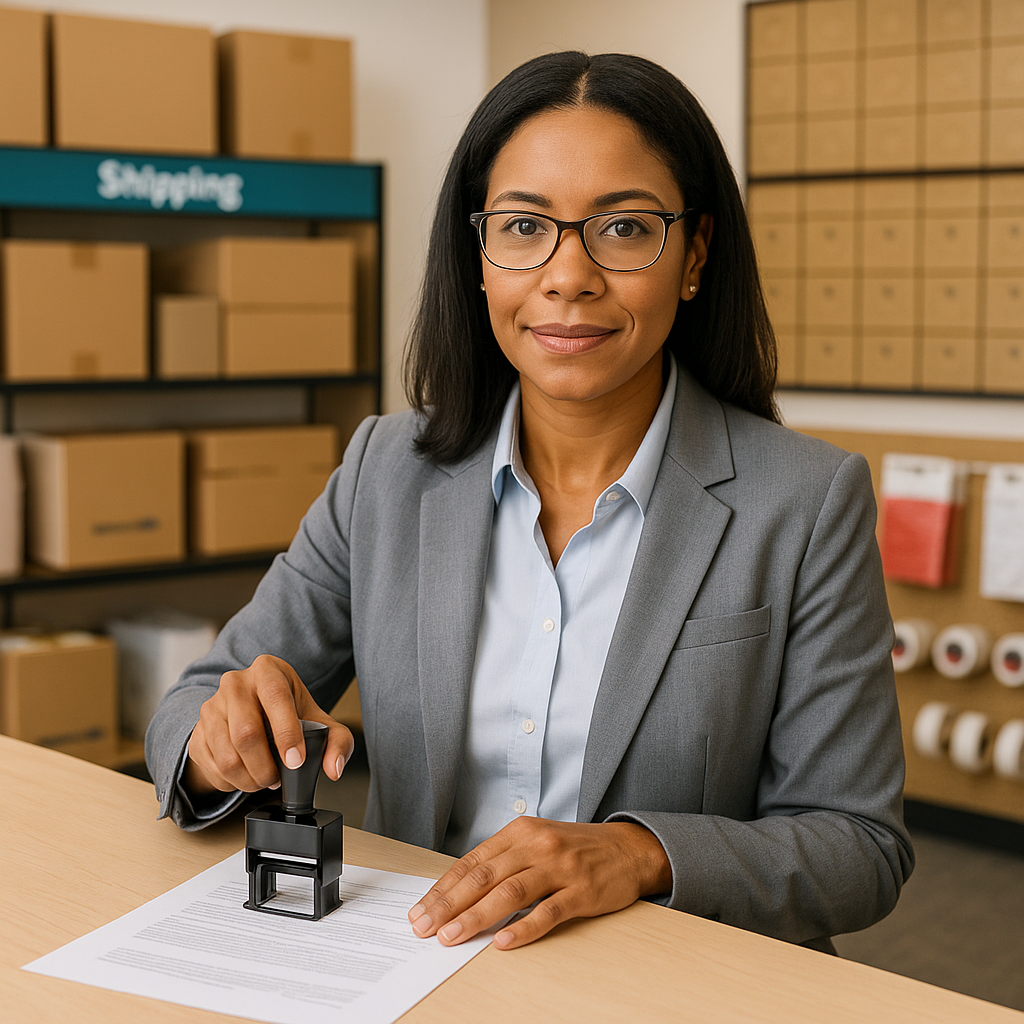
When life gets busy, legal paperwork is usually the last thing you want to think about. But if you’re handling a real estate closing, helping a family member with a power of attorney, or finalizing a business agreement, you’ll probably need a notary public. Understanding how notarization works can save you time, stress, and costly mistakes.
At Federal Mailbox Center in Sherman Oaks, we help individuals and businesses across the San Fernando Valley get documents notarized quickly and correctly. Here’s a clear guide to when you need a notary, what to expect, and how to prepare.
What Does a Notary Public Actually Do?
A notary public is a state-appointed official who verifies the identity of signers, witnesses signatures, and helps deter fraud. The notary’s role isn’t to give legal advice or draft documents, but to ensure that:
- The signer is who they say they are (by checking valid identification).
- The signer is signing willingly and not under pressure or duress.
- The signer understands what they’re signing at a basic level.
- The document is properly executed with the right type of notarization.
In California, notaries follow strict rules about identification, record-keeping, and the wording of notarial certificates. Using a professional notary service in Sherman Oaks helps ensure your paperwork will hold up when it matters most.
Common Situations When You Need a Notary
Many people first encounter a notary during a major life event. Here are some of the most common times you’ll need notarization in the San Fernando Valley:
1. Powers of Attorney
A power of attorney (POA) allows someone else to act on your behalf for finances, health care, or other decisions. Because a POA grants significant authority, many institutions require it to be notarized.
You may need a notarized power of attorney when:
- Aging parents want to appoint an adult child to help with finances.
- You’re traveling or moving out of state and need someone to sign documents on your behalf.
- You need a medical or health care power of attorney for hospital or long-term care planning.
Practical tip: In California, some powers of attorney also need witnesses in addition to a notary. Before you come in, confirm the exact requirements on your form or with the institution asking for it (such as a bank or healthcare provider).
2. Real Estate Transactions
Real estate deals generate a lot of paperwork, and much of it requires notarization. Whether you’re closing on a home in Sherman Oaks, refinancing a condo in Van Nuys, or signing a deed for property elsewhere, you can expect to see a notary.
Documents that often require notarization include:
- Grant deeds and quitclaim deeds
- Deeds of trust and mortgages
- Loan and refinance packages
- Home equity line of credit (HELOC) documents
Practical tip: For large real estate signings, ask if you’ll be working with a loan signing agent (a notary with additional training in real estate documents). At Federal Mailbox Center, we can help with many common real estate notarizations and coordinate with your lender or escrow company when needed.
3. Business and Financial Documents
Owners of small and midsize businesses in Sherman Oaks often need notarization for:
- Partnership or operating agreements
- Corporate resolutions and minutes
- Vendor contracts and affidavits
- Bank forms for business accounts and loans
Notarization helps banks, investors, and other parties trust that the right person signed on behalf of the company.
4. Personal and Family Documents
Everyday life can also require a notary, including:
- Travel consent letters for minors flying without both parents.
- Affidavits needed for school, immigration, or court matters.
- Estate planning documents such as certain trusts and advanced directives.
Practical tip: Always check whether a document needs a notarized signature or simply a witnessed signature. They are not the same. If the form mentions a notary public or includes a notarial block, you’ll need a notary.
Types of Notarization: Acknowledgments vs. Jurats
Most notarizations fall into one of two categories. Knowing which one you need helps the appointment go smoothly.
Acknowledgment
An acknowledgment is used when you’re confirming that you signed a document voluntarily. You don’t necessarily have to sign in front of the notary, but you must appear in person to acknowledge the signature.
Common for:
- Real estate documents
- Powers of attorney
- Many business agreements
Jurat
A jurat is used when you’re swearing that the contents of a document are true. You must sign in front of the notary, who will administer an oath or affirmation.
Common for:
- Affidavits
- Some court-related documents
- Certain financial or government forms
Practical tip: If you’re unsure which type you need, don’t guess. The notary cannot choose for you, but you can look at the document instructions or ask the organization requesting the form. At Federal Mailbox Center, we can explain the difference so you can make the right choice.
How to Prepare for a Notary Appointment
A little preparation goes a long way. Here’s how to make your visit quick and stress-free at our Sherman Oaks location.
1. Bring Valid Identification
California has specific ID rules. Generally accepted forms of ID include:
- State-issued driver’s license or ID card
- U.S. passport or passport card
- Foreign passport (with required conditions)
- U.S. military ID (with photo, description, signature, and ID number)
The ID must be current or issued within the last few years (within the period allowed by California law) and must match the name on the document closely enough for the notary to confirm your identity.
Practical tip: If your name recently changed due to marriage or another reason, bring supporting paperwork (like a marriage certificate) and use the name on your current ID whenever possible.
2. Don’t Sign Too Early (Sometimes)
For documents requiring a jurat, you must sign in front of the notary. For acknowledgments, you can usually sign in advance. When in doubt, leave the signature line blank until you arrive; you can fill it out quickly onsite.
3. Bring All Pages of the Document
The notary must see the complete document, not just the signature page. That helps confirm the document is complete and properly described on the notarial certificate.
Practical tip: If you’re printing a real estate packet or power of attorney, bring the entire set. It’s fine if the notary only stamps one or two specific pages, as long as they can review the rest.
4. Confirm if Witnesses Are Required
Some documents, especially certain estate planning and healthcare forms, require witnesses in addition to a notary. California has rules about who can serve as a witness.
Call ahead to ask whether we can provide witnesses at Federal Mailbox Center or whether you should bring your own. This is especially important if you’re coordinating for elderly parents or someone with limited mobility.
Mobile vs. In-Store Notary Services
Depending on your situation, you may prefer to visit a notary in person or have one come to you.
- In-store notary services: Ideal for quick, straightforward documents. At our Sherman Oaks location on Van Nuys Blvd, you can combine notarization with other services like copying, scanning, and shipping.
- Mobile notary services: Helpful for real estate signings, hospital or care facility visits, and situations where multiple signers can’t easily travel.
Practical tip: Mobile notary services typically include additional travel fees. For simple notarizations, visiting our San Fernando Valley store can be the most cost-effective option.
Why Use a Local Notary in Sherman Oaks?
Working with a local notary public has several advantages if you live or work in the San Fernando Valley:
- Convenience: You can stop by during your lunch break or while running other errands.
- Familiarity with common forms: We frequently see local real estate, banking, and school documents and understand typical requirements.
- One-stop services: At Federal Mailbox Center, you can notarize, make copies, scan, and ship your documents in one visit.
Our team at 5632 Van Nuys Blvd in Sherman Oaks is used to helping busy professionals, families, and seniors navigate the notarization process with patience and clear explanations.
Need Notary Public Services in the San Fernando Valley?
Whether you’re finalizing a power of attorney, signing real estate paperwork, or handling an important business agreement, notarization doesn’t have to be stressful. With the right preparation and a reliable local notary, the process can be quick and straightforward.
If you’re in Sherman Oaks or nearby communities like Van Nuys, Encino, or Studio City, stop by Federal Mailbox Center for professional notary public services. Bring your ID, your unsigned document (if required), and any instructions you’ve received, and we’ll guide you through each step.
This article is for general informational purposes and is not legal advice. For questions about which documents you need or how to structure them, please consult an attorney or qualified legal professional.